
Thinking about switching to an eco-friendly vehicle but confused between hybrid and electric? As the world moves towards greener transport, understanding the differences between these two options is essential for making the right choice.
What Are Hybrid and Electric Cars?
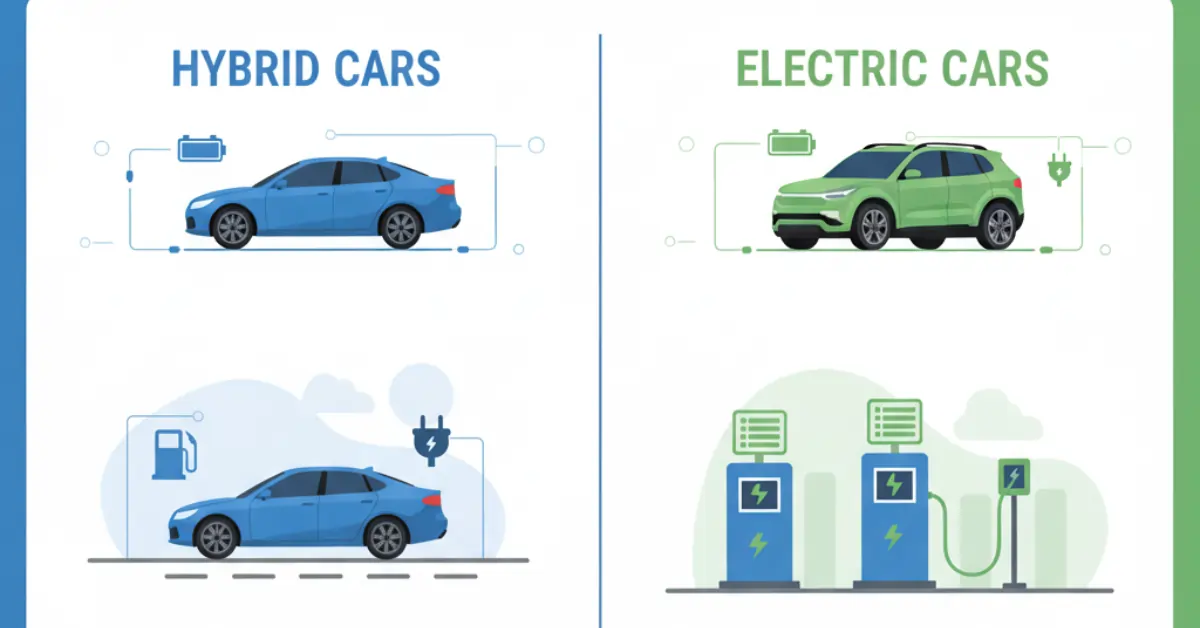
- Hybrid Cars combine a regular gasoline engine with an electric motor to boost fuel efficiency and lower emissions. The electric motor helps during acceleration and recharges its battery by capturing energy from braking.
- Electric Cars (EVs) run entirely on electric power stored in batteries. They produce no tailpipe emissions and rely on charging stations to replenish their power.
Key Differences
| Feature | Hybrid Car | Electric Car |
|---|---|---|
| Power Source | Gasoline engine + electric motor | Battery + electric motors only |
| Range | Longer due to gasoline backup | Limited by battery capacity |
| Emissions | Reduced but not zero | Zero tailpipe emissions |
| Performance | Balanced fuel efficiency and power | Instant torque, faster acceleration |
| Refueling/Charging | Gas stations widely available | Charging infrastructure growing |
Cost & Practicality for U.S. Drivers
- Purchase & Maintenance: Hybrids usually cost less upfront (~$28,000) but EVs have lower maintenance (~$300/year) because they have fewer moving parts.
- Charging vs. Fuel: Hybrids refuel easily anywhere, while EV charging stations are expanding rapidly but still need planning.
- Government Incentives: The U.S. offers tax credits and rebates for both hybrids and EVs — check local policies to maximize savings.
Which One Should You Choose?
- Opt for a hybrid if you want longer range, quick refueling, and moderate environmental benefits.
- Go for an electric car if zero emissions, low running cost, and cutting-edge tech excite you, and you have reliable access to charging.
FAQs
Q: Can hybrids run on electric power only?
A: Yes, hybrids can operate on electric power at low speeds or in certain conditions but switch to hybrid mode for more power.
Q: How long does EV charging take?
A: Fast chargers can fill 80% battery in under 30 minutes; home chargers usually take several hours.
Q: Are electric cars really cleaner?
A: EVs have zero tailpipe emissions, but overall impact depends on electricity sources and battery production.
Q: Can I install a home charger?
A: Yes, many install Level 2 chargers for faster home charging; professional installation is recommended.